



Details
Just like natural or molasses-coated copra,
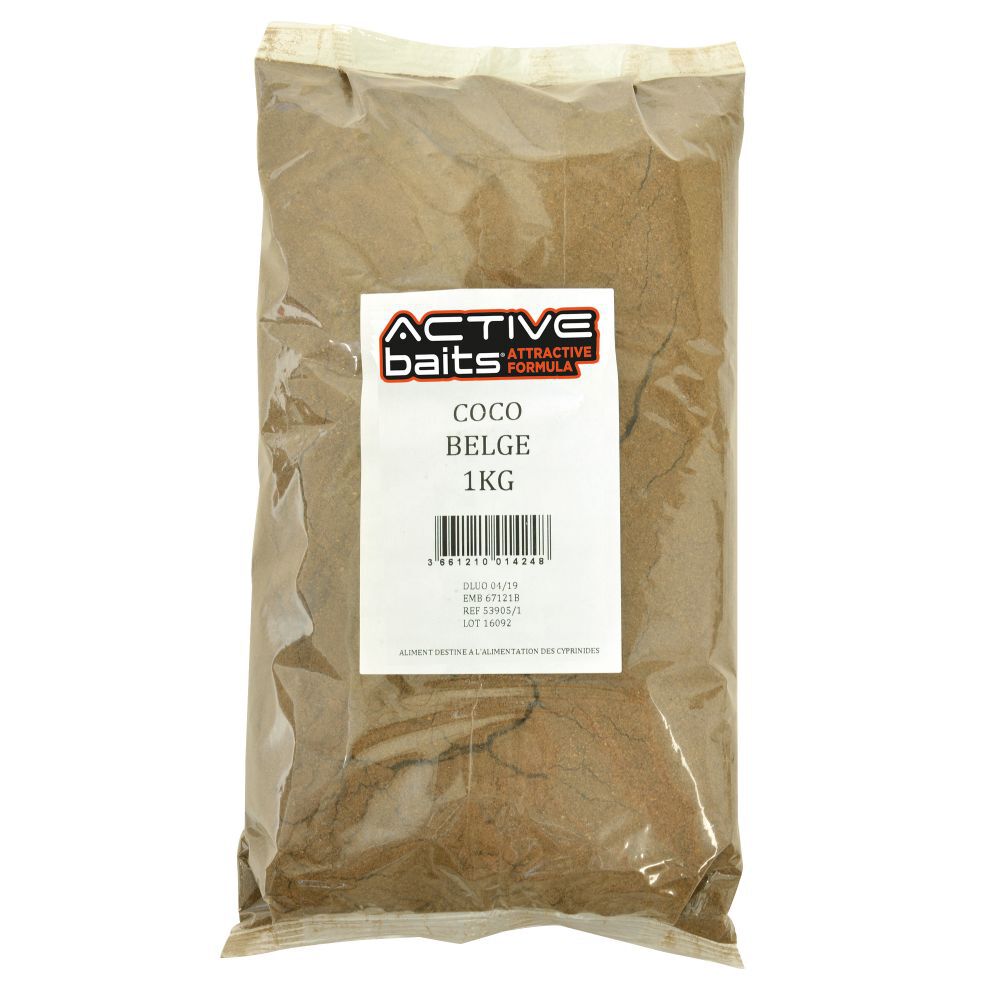
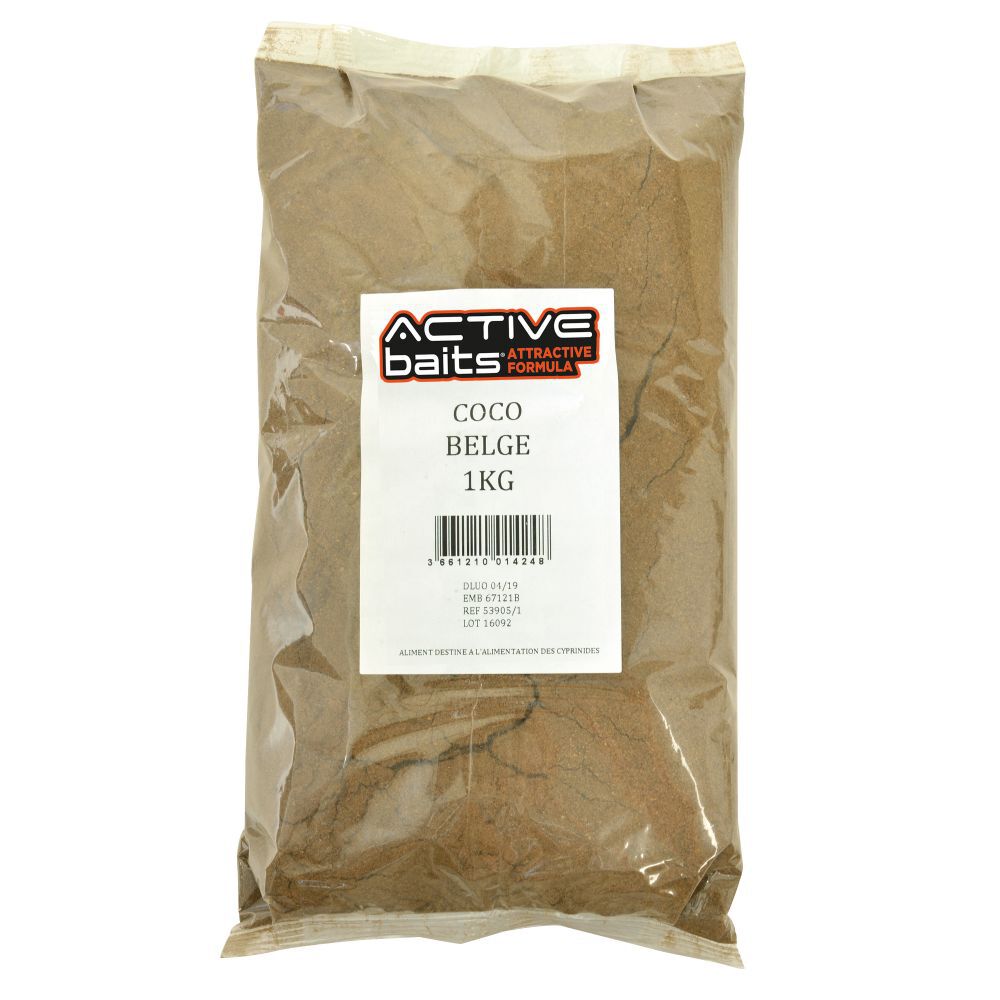
BELGIAN COCONUT
is made from coconuts. Thisflour
is actually extracted from the copra of the coconut, that is, the white part. The fibers of the nut (shell) are removed, the milk is extracted, and then the remaining pulp is cooked and pressed to extract the oil. The pleasant taste ofBelgian coconut
comes from this cooking process and is very appealing to fish. Light brown in color,BELGIAN COCONUT
is widely used by coarse anglers because it possesses characteristics that are quite rare among flours. While not very nutritious,Belgian coconut
has a laxative effect that aids the digestion of fish. This is a dispersing flour that enhances the "vertical" action of the groundbait, meaning it works by rising to the surface and then, when saturated with water, sinks back to the bottom. However, this effect can be adjusted by pre-wetting it to create a fairly liquid paste that will act as a groundbait lubricant. Thus, it will work horizontally along the bottom without rising to the surface.Belgian coconut
is an essential flour that attracts all types of fish. Characteristics:flours
for the composition of your groundbaits for pole fishing, float fishing, or feeder fishing,ACTIVE BAITS
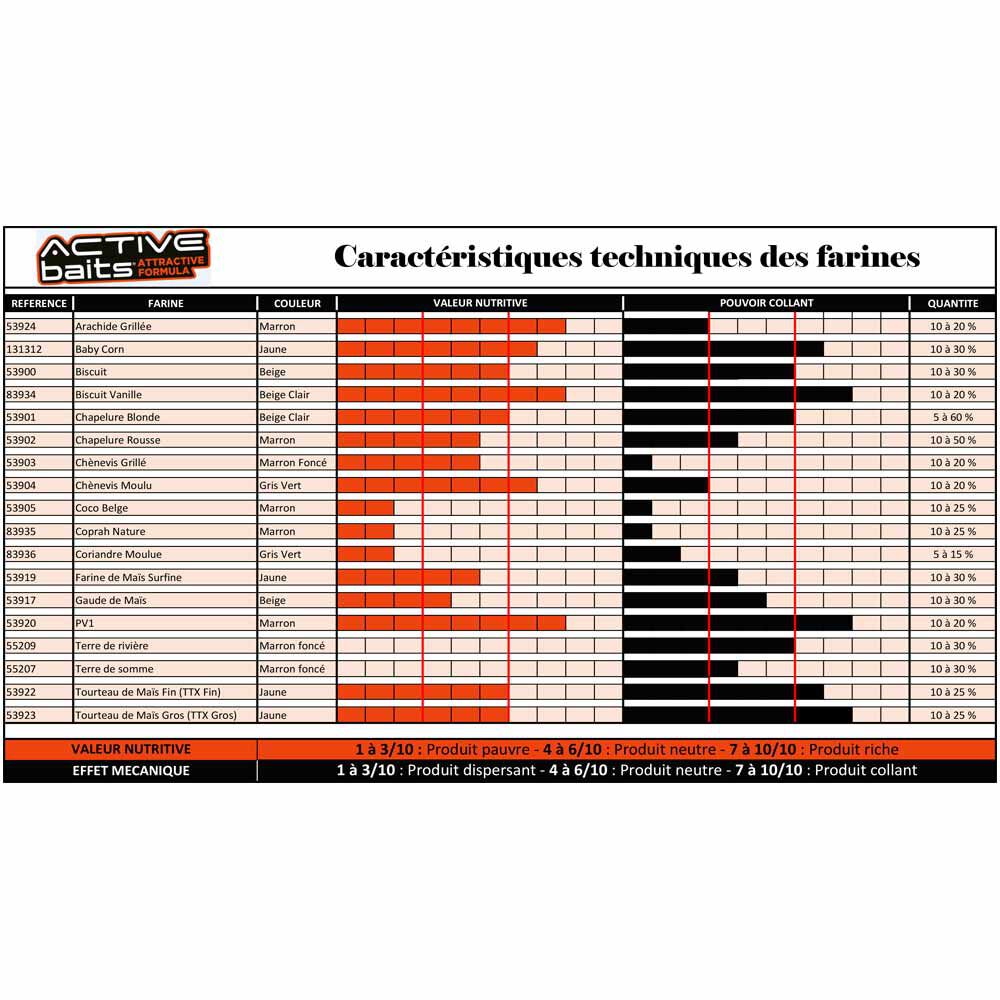
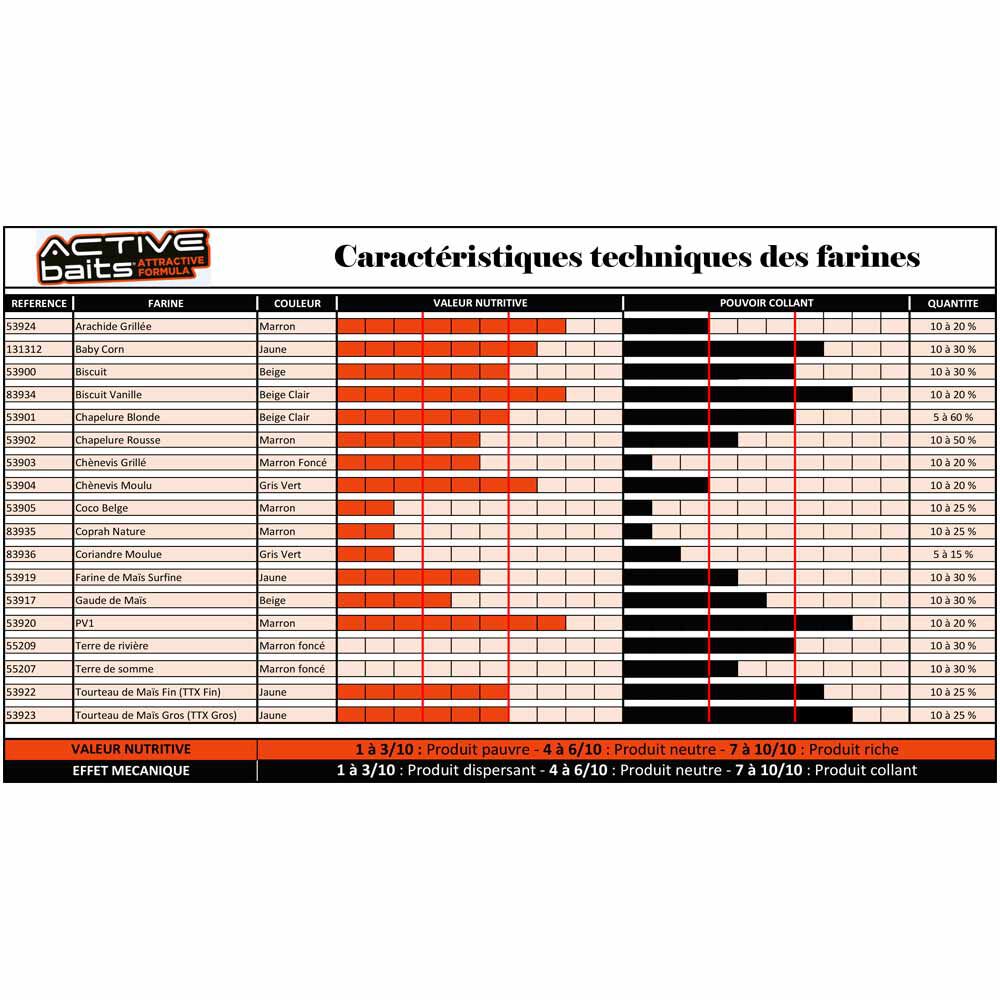
has developed a table summarizing the main characteristics of each flour. This table indicates their nutritional value, their binding power, as well as the proportions to respect to obtain an effective and attractive mechanical action. These proportions may vary depending on the fishing conditions: fishing location (pond, lake, canal, river, etc.), weather conditions (current, wind, etc.), season (spring, summer, autumn, winter), and target species (bleak, roach, rudd, bream, tench, carp, etc.). You can download this table as a PDF by clicking on the icon below.
Comment